
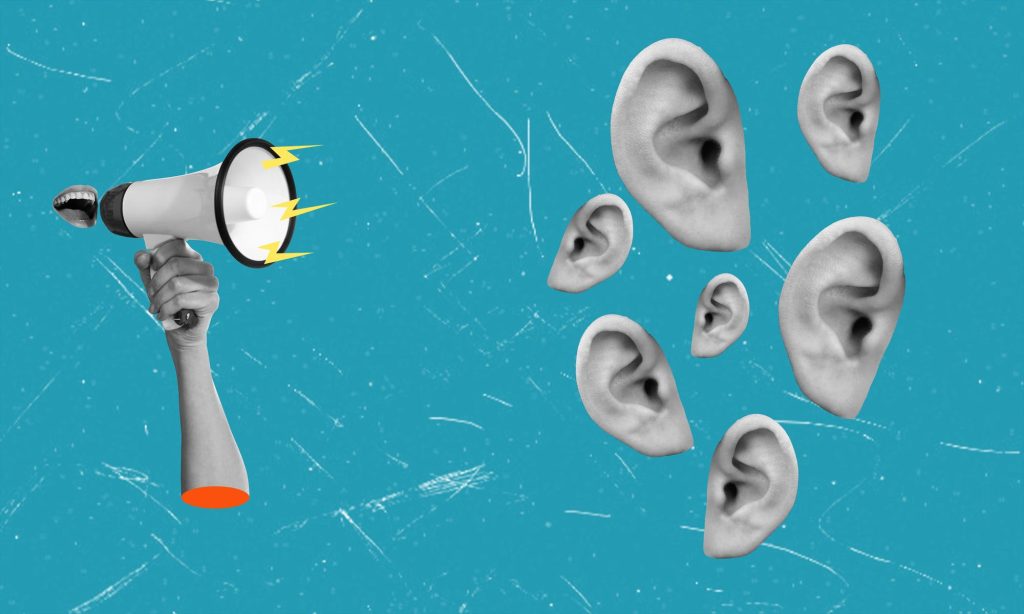
Real communication doesn’t start with a message — it starts with observation.
Audience listening isn’t a data exercise; it’s a mindset. It’s the moment when a brand stops talking to its audience and starts listening through it.
Understanding what people say about your brand, your products, or your industry isn’t simply about gathering information. It’s about recognizing how people perceive value, trust, and experience in relation to you — and how that perception evolves over time.
Every comment, review, or mention carries a story. Behind every data point, there’s an emotion, a reaction, or a need waiting to be interpreted. The deeper you listen, the clearer the direction becomes.
Audience listening turns raw noise into meaningful insight. It helps you see what your audience actually cares about, what themes gain traction, and where the energy of a conversation is moving. When you pay attention to that flow, your marketing shifts from assumption to understanding.
The value lies in the nuances. You might notice that people use different language than your brand does — a sign that your tone needs adjustment. Or that they connect more strongly with certain aspects of your story than others — showing you where to focus your next campaign. These are small signals, but they often point to the biggest opportunities for alignment and clarity.
Listening isn’t just a research phase; it’s an ongoing part of communication. It guides how you design messages, respond to feedback, and adapt your overall presence. The market is dynamic — needs change, expectations evolve, and relevance depends on how quickly you perceive those shifts. Audience listening keeps you tuned in.
The more consistently you listen, the more precisely you can act.
And over time, your audience stops feeling observed — it starts feeling understood.