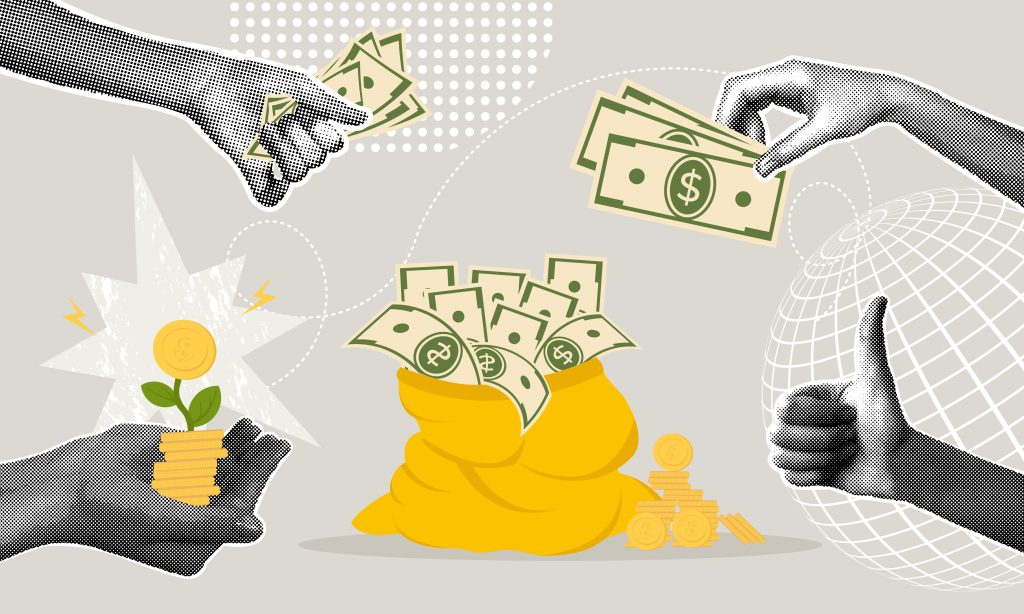
You’ve got the idea, the drive, and maybe even a prototype. But before you scale, there’s a fork in the road: Do you bootstrap and grow organically — or raise capital and sprint ahead? This decision shapes everything from your company culture to your long-term control. And while there’s no universal answer, understanding the trade-offs is essential.
What do these models really mean?
1. Bootstrapped startup
A bootstrapped startup is built using the founder’s own resources—personal savings, early revenue, and sweat equity. There are no external investors, which means:
- Full control over decisions
- No equity dilution
- Growth is paced by cash flow
- Lean operations and frugal innovation
Think of companies like Mailchimp and Zoho — both scaled massively without outside funding.
2. Funded startup
A funded startup raises capital from external sources — venture capitalists, angel investors, or crowdfunding platforms. This model offers:
- Rapid scaling potential
- Access to expert networks and mentorship
- Aggressive market penetration
- Pressure to meet investor expectations
Examples include BYJU’S and BrewDog, which used funding to expand globally.
Pros and Cons at a Glance
| Model | Pros | Cons |
|---|---|---|
| Bootstrapped | Full autonomy, equity retention, sustainable growth | Slower scaling, limited resources, and founder burnout |
| Funded | Fast growth, strategic support, market dominance | Equity dilution, investor pressure, loss of control |
The strategic trade-offs
- Control vs. Speed: Bootstrapping gives you freedom, but funding gives you fuel.
- Vision vs. Validation: Bootstrapped founders follow their gut; funded ones often pivot based on investor feedback.
- Risk vs. Resilience: Bootstrapping is riskier personally, but often builds more resilient businesses.
Key questions to ask yourself
- What’s your risk appetite?
Are you comfortable growing slowly, or do you need to move fast? - What industry are you in?
Some sectors (like biotech or hardware) almost require funding due to high upfront costs. - Do you want to retain full control?
If your vision is non-negotiable, bootstrapping may be the better path. - How scalable is your model?
If your business can generate early revenue, bootstrapping is viable. If not, funding may be necessary.
There’s no “right” answer—only the one that aligns with your goals, values, and resources. Bootstrapping builds grit and independence. Funding accelerates growth and opens doors. The best founders don’t just choose—they adapt. Some start bootstrapped and raise later. Others go all-in with investors from day one. The real dilemma isn’t choosing a path—it’s knowing why you’re on it.